

Introduction
India’s growing industrial, commercial, and infrastructure sectors require reliable electrical cable management systems. From manufacturing plants and warehouses to commercial buildings and power distribution facilities, properly organized electrical wiring is essential for efficient operations. Choosing the right Cable Tray helps support electrical cables, maintain organized installations, and make inspection and maintenance easier. However, selecting the right product requires understanding the project requirements, installation environment, material quality, and cable load.
Why Are Cable Tray Systems Important for Industrial Projects?
Electrical installations often involve multiple power cables, control cables, and communication wires. Managing these cables without a proper support system can make installation and maintenance difficult.
A well-planned cable management system offers several advantages:
- Organized Cable Routing: Keeps electrical cables arranged along planned pathways.
- Easy Maintenance: Makes cable inspection and identification more convenient.
- Better Space Management: Helps organize wiring in industrial and commercial facilities.
- Future Expansion: Allows additional cables to be accommodated when sufficient capacity is planned.
- Installation Flexibility: Supports different cable routing requirements across various facilities.
These advantages make cable management an important consideration in modern electrical infrastructure.
Read More: Top Renowned Builders in Bangalore for Modern Homes
Understanding Different Cable Tray Applications
Different industrial projects have different cable management requirements. The appropriate design depends on cable quantity, installation layout, environmental exposure, and technical specifications.
1. Manufacturing Industries
Factories require organized cable routing for production machinery, electrical panels, motors, and control systems. Suitable cable support products help maintain structured electrical installations.
2. Commercial Buildings
Shopping complexes, offices, hotels, and commercial facilities use cable management systems for lighting, power distribution, and communication networks.
3. Power and Energy Projects
Power generation and distribution facilities require properly designed cable support arrangements to manage electrical connections and maintain accessibility.
4. Warehouses and Infrastructure
Warehouses, transportation facilities, and infrastructure projects often require organized cable routing across large installation areas.
Why Choose a Perforated Cable Tray?
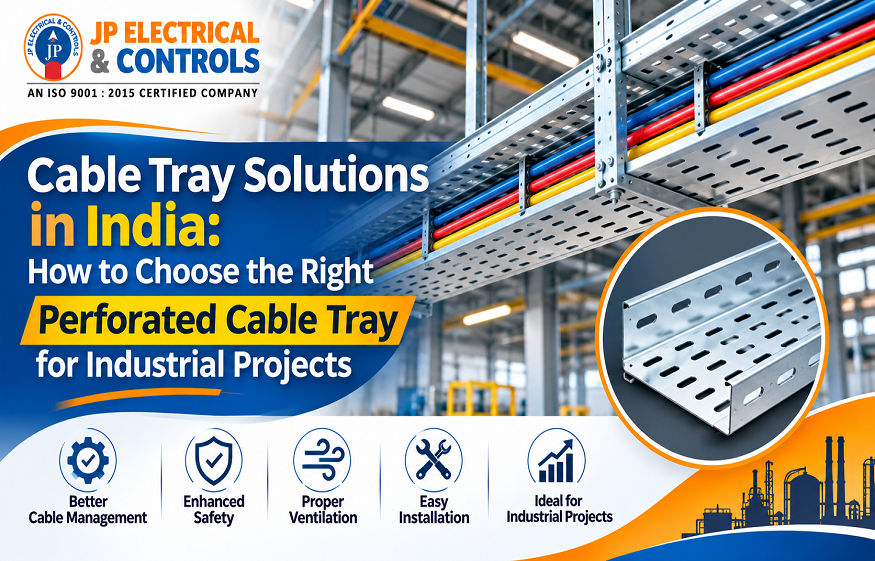
A perforated cable tray is a popular option for many industrial and commercial electrical installations. It features openings along its base and sides, which can support ventilation and provide convenient options for cable securing.
A properly selected Perforated Cable Tray can be considered for factories, warehouses, commercial buildings, and other facilities where organized cable support is required.
Key Benefits of Perforated Cable Trays
- Ventilation: Openings in the tray structure can help airflow around installed cables.
- Cable Organization: Provides a structured pathway for arranging electrical wiring.
- Maintenance Accessibility: Supports convenient inspection and cable management.
- Flexible Installation: Can be incorporated into different routing arrangements using suitable accessories.
- Multiple Material Options: Depending on manufacturer availability, perforated trays may be supplied with galvanized, powder-coated, or other specified finishes.
Important Factors to Consider Before Buying
Selecting a suitable product requires more than comparing prices. Buyers should evaluate the following technical factors.
Material and Surface Finish
Consider the installation environment before selecting the material and finish. Galvanized and powder-coated options may be suitable for different applications depending on their specifications and environmental exposure.
Dimensions and Thickness
The required width, side height, and material thickness depend on cable quantity, cable weight, and installation requirements.
Load Capacity
Check the manufacturer’s load tables and confirm that the tray, supports, and accessories can safely handle the expected cable load.
Installation Environment
Indoor, outdoor, and industrial environments may require different levels of corrosion protection. Select the finish according to actual site conditions.
Accessories and Fittings
Bends, tees, reducers, couplers, and support brackets may be required to complete the cable routing system.
How to Find a Reliable Cable Tray Manufacturer in India
Choosing a dependable manufacturer is an important step for contractors, electrical engineers, builders, and industrial purchasing teams.
Before placing an order, consider these points:
- Review the manufacturer’s product range.
- Check material and coating specifications.
- Ask for technical drawings and load information.
- Confirm available dimensions and thickness options.
- Compare quotations using equivalent product specifications.
- Discuss delivery schedules and product availability.
- Check whether technical assistance is available.
A manufacturer that provides clear specifications and consistent product quality can make project planning and purchasing easier.
Read More: Rethinking Efficiency – Designing for Longevity and Impact
Future of Cable Management in India’s Industrial Sector
India continues to develop its manufacturing capabilities, commercial infrastructure, renewable energy facilities, and industrial projects. These developments create a need for properly planned electrical installations.
Modern cable management solutions help organize wiring across different types of facilities. As industrial projects become more complex, selecting products based on technical requirements, safety considerations, and long-term maintenance needs becomes increasingly important.
Businesses should focus on suitable product specifications rather than selecting cable management products based only on initial purchase price.
Conclusion
Cable management plays an important role in maintaining organized and accessible electrical installations across India’s industrial and commercial sectors. Choosing the right product depends on material quality, dimensions, load capacity, surface finish, and installation conditions.
Perforated cable trays offer a practical option for many applications where structured cable support and convenient maintenance are required. By understanding project requirements and comparing technical specifications, businesses can select suitable cable management solutions for their installations.
Working with an experienced manufacturer and planning the installation carefully can help support efficient and well-organized electrical infrastructure.
Frequently Asked Questions
- What is a cable tray used for?
A cable tray is used to support and organize electrical cables along planned routes in industrial, commercial, and infrastructure installations.
- What is a perforated cable tray?
It is a cable support system featuring openings along its base and sides, which can help with ventilation and cable management.
- Where are perforated cable trays commonly used?
They are commonly considered for factories, warehouses, commercial buildings, power facilities, and industrial plants.
- How do I choose the right cable tray size?
Consider cable quantity, cable diameter, total weight, installation space, future expansion, and the manufacturer’s load ratings.
- What materials are available for cable trays?
Depending on the manufacturer, options may include galvanized steel, powder-coated steel, and hot-dip galvanized steel.
- What should I check before purchasing a cable tray in India?
Review material quality, dimensions, thickness, load capacity, surface finish, technical documentation, and delivery requirements.